Straightening teeth and correcting bite — at the right age, with the right approach
Orthodontics is the branch of dentistry that deals with crooked teeth, crowded teeth, gaps, and bite problems. For children, the right time to begin treatment is important — too early may not be effective, too late may miss the window when the jaws are still growing and easier to guide.
At Tulip Kids Dental, Dr. Sayli provides early orthodontic assessment — she checks how your child's teeth and jaws are developing and advises on the right time to begin any correction. She also provides interim treatments like space maintainers and habit-breaking appliances that set the stage for braces later.
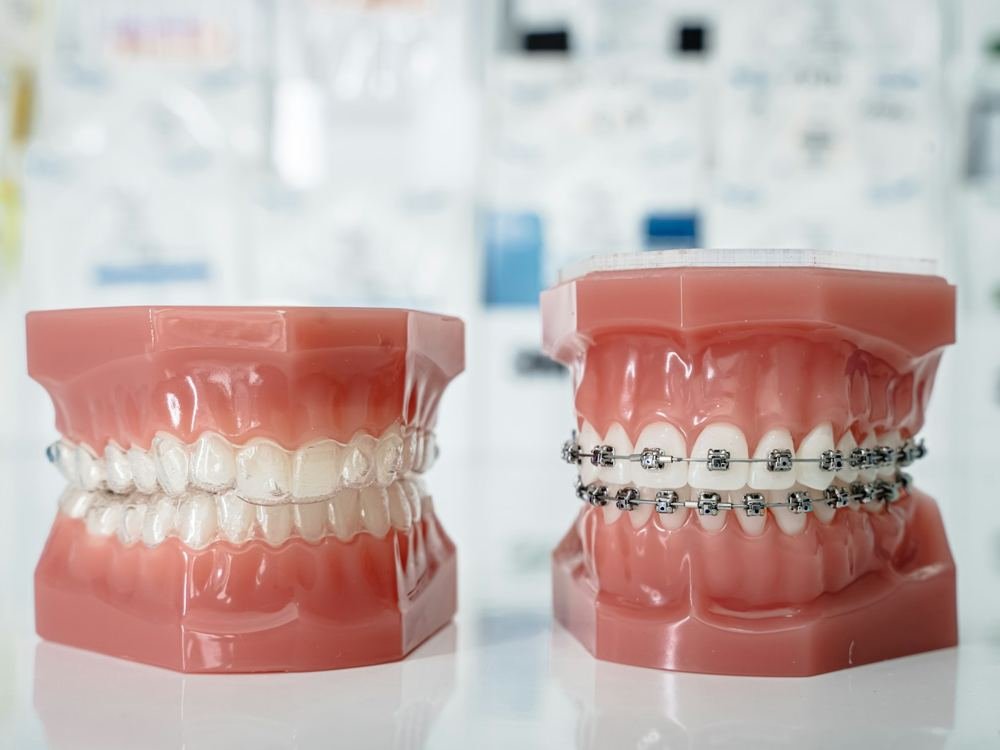
For comprehensive braces or aligner treatment, children are referred to specialist orthodontists at the right age — ensuring they get the right treatment at the right time.
We explain every step to your child before doing it — so there are no surprises and no fear.
Dr. Sayli checks your child's bite, jaw development, and tooth eruption pattern. Early problems like thumb-sucking habits, tongue-thrusting, or jaw misalignment are identified and addressed.
If your child has a habit like thumb-sucking, mouth-breathing, or tongue-thrusting that is pushing teeth out of position, a simple removable appliance can break the habit before it causes permanent damage.
If a baby tooth falls out or is removed early, a space maintainer keeps the gap open so the permanent tooth can grow in properly. Without it, surrounding teeth drift and the permanent tooth grows crooked.
As your child grows, Dr. Sayli monitors the development. When the time is right for braces or aligners, she refers to a specialist orthodontist — with a full history and assessment already prepared.
The Indian Orthodontic Society recommends a first orthodontic assessment at age 7. This does not mean braces start at 7 — it means any early problems can be caught and addressed. Dr. Sayli performs this assessment as part of routine care.
Not necessarily. Between ages 6–10, many children have a "mixed dentition" — a combination of baby and permanent teeth — that looks crowded temporarily. Dr. Sayli will assess whether this is a genuine problem or normal development.
When a baby tooth is lost early (due to decay or extraction), the surrounding teeth can drift into the gap. A space maintainer is a small appliance that holds the gap open until the permanent tooth is ready to erupt. It prevents future crowding.
For comprehensive brace treatment, yes — an orthodontist specialist is recommended. Dr. Sayli provides the early assessment and preparation, then refers when the time is right. She coordinates the care so nothing falls through the cracks.
Call or WhatsApp us to book. Mon–Fri, 4 PM – 9 PM (Sat by appointment).
One clinic, one trusted team — a kids' dental home in Dombivli East.
Saroj CHS, Manpada Cross Road, Near ICON Hospital, Dombivli East – 421201
* In a review of 22 clinical trials, fluoride varnish reduced tooth decay by about 37% in baby teeth and 43% in permanent teeth (Marinho VCC et al., Cochrane Database of Systematic Reviews, 2013, doi:10.1002/14651858.CD002279.pub2). Results vary with each child's diet, brushing and cavity risk.
† We use comfort-first techniques, numbing gel and local anaesthesia when needed, so most children feel little or no discomfort. Every child is different; we explain what to expect before any treatment.
 Mon–Fri 4 PM – 9 PM · Sat by appt
 Manpada Cross Road, Dombivli East
 97689 58636
 WhatsApp


 Book Appointment